
End-to-end horizontal chain
Extend management vision beyond purchasing, sales and stock, forward to product formulas and engineering change (PLM) and back to business-finance cost accounting.
ABOS FRAMEWORK
On top of the horizontal SCOR process, ABOS uses seven views (strategy, organization, capability, process, information, application, technology) and dual maturity of process and business capability to find and fix cross-department operating bottlenecks.
SCOR helps companies define the horizontal steps of plan, source, make and deliver, but whether a business capability delivers stable results depends on its weakest supporting element. Buying software without changing responsibilities and data definitions often leads to wasted investment: the system is live and the business is unchanged.
SCOR: the horizontal process
Extend management vision beyond purchasing, sales and stock, forward to product formulas and engineering change (PLM) and back to business-finance cost accounting.
Diagnose strategy, organization, capability, process, information, application and technology together: who decides (organization), which data can be trusted (information), and which of the old and new systems is the record-keeper (application).
Accept software deployment, daily role adoption, controlled processes and improved finance and delivery metrics independently of one another.
Horizontal main line
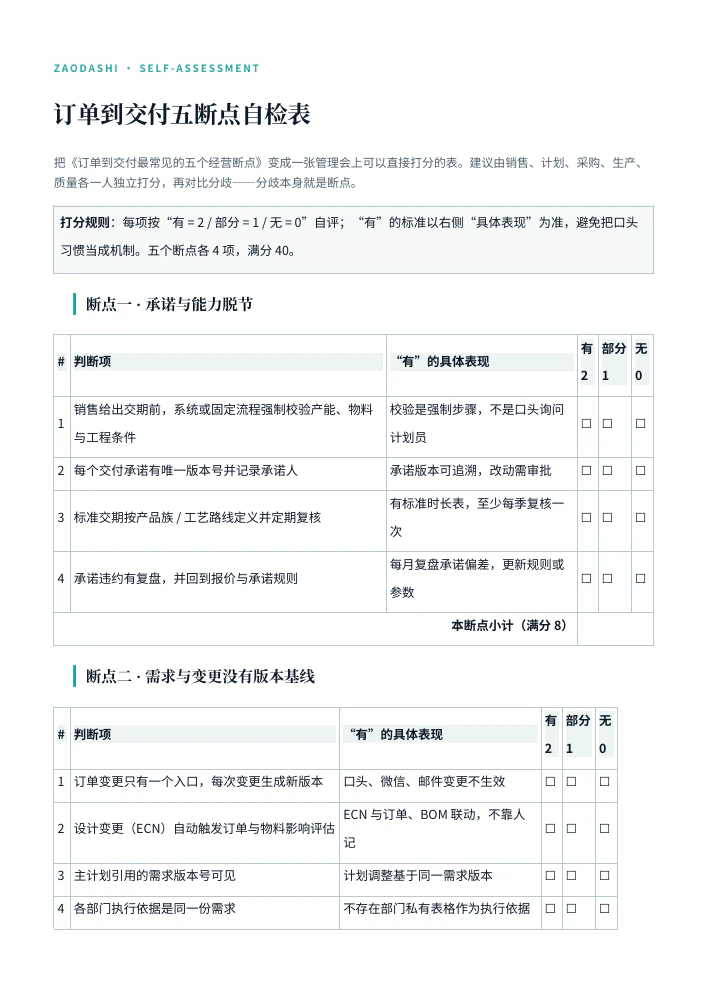
Check commitments, formulas and BOMs, scheduling, material readiness and shipping handovers in 15 minutes.
Get the free PDF →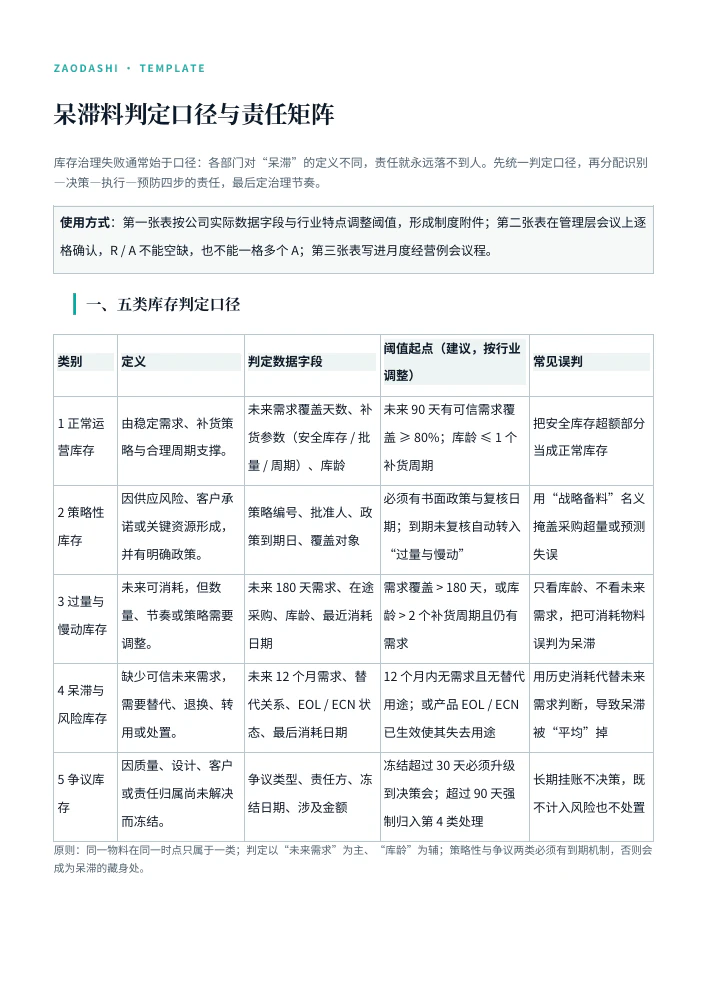
Clarify ageing and shelf-life bands, freeze causes, accountable teams and disposition routines.
Get the free PDF →The first discussion is not a pitch for an all-in-one package. Bring a delivery, readiness, inventory or legacy-integration problem. Together we identify your stage and an initial scope you can verify.
Book a focused discussion →