ZAODASHI · MANUFACTURING OPERATIONS SOFTWARE & ADVISORY

Run Formulas, Planning, Inventory, Quality, and Finance on One Connected Chain

Zaodashi combines the ABOS operating architecture method with ABOS Suite, the AI-era enterprise operations system built beyond traditional ERP, for process, batch-component, and project-configured manufacturers. Start from spreadsheets, coexist with your existing ERP, or replace legacy systems safely.

Planners connect orders, production and inventory in a shared manufacturing workflow.
CONNECTED OPERATIONSOrders · Production · Inventory
  1. Product & Orders (PLM/CRM)
  2. Planning & Readiness (ERP/SRM)
  3. Batch Warehouse (WMS)
  4. Production & Quality (MES/QMS)
  5. Finance & ABOS Agent Checks (FMS/L0-L2)

What is ABOS?

ABOS stands for Agentic Business Operations System, an AI-era system for digital and intelligent business operations. It organizes a manufacturer's chain from formulas, planning, inventory and quality to finance by business capability, and lets controlled agents join daily checks and coordination.

  • ABOS FrameworkThe method for diagnosis and governance: seven views and dual maturity decide what to fix first and how to verify it.
  • ABOS SuiteThe software that puts it to work: nine business capabilities, selected as needed and rolled out in steps.
  • Built-in ABOS AgentsA controlled agent engine: read-only checks and drafted advice, executed only after the responsible person confirms.

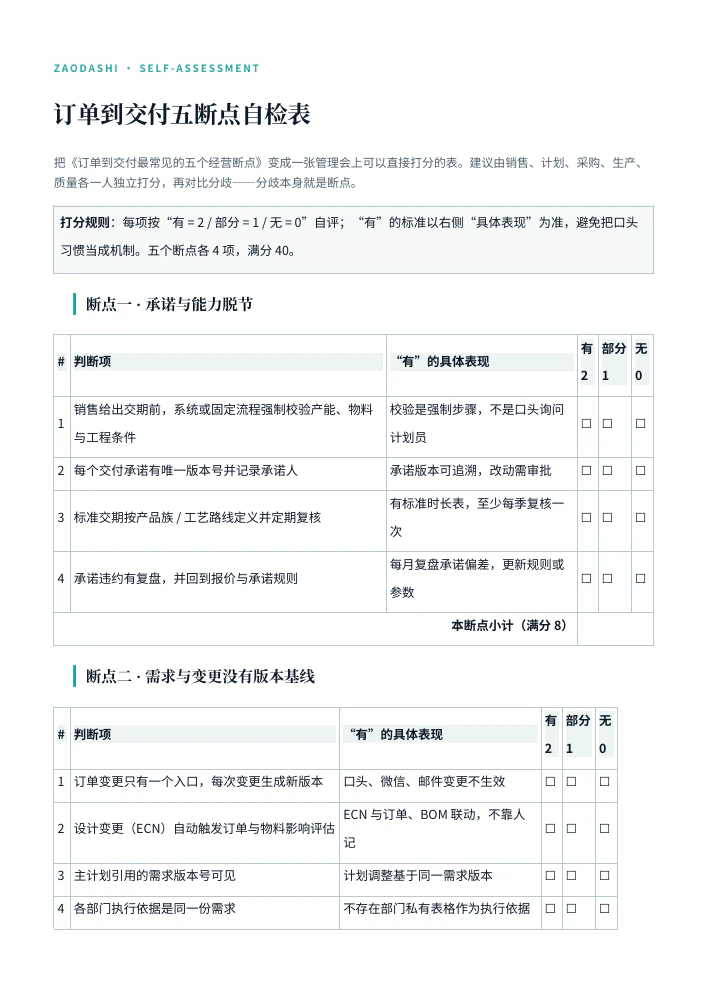
Departments and basic software are in place, so why do cross-functional operations still stall?

Following the SCOR model, most manufacturers already divide work across R&D, planning, purchasing, production and finance. Yet with many variants, frequent changes and volatile demand, work stalls at these handovers:

Formula and BOM changes lag behind orders, so delivery is firefighting

Formulas, labels, drawings and BOM versions change often, yet dates are promised from experience. Long-lead materials, version errors or held batches surface only after scheduling.

Link PLM versions, order commitments, inbound purchasing and readiness checks; rule-based planning and ABOS Agent alerts expose gaps early.

Explore delivery and coordination →

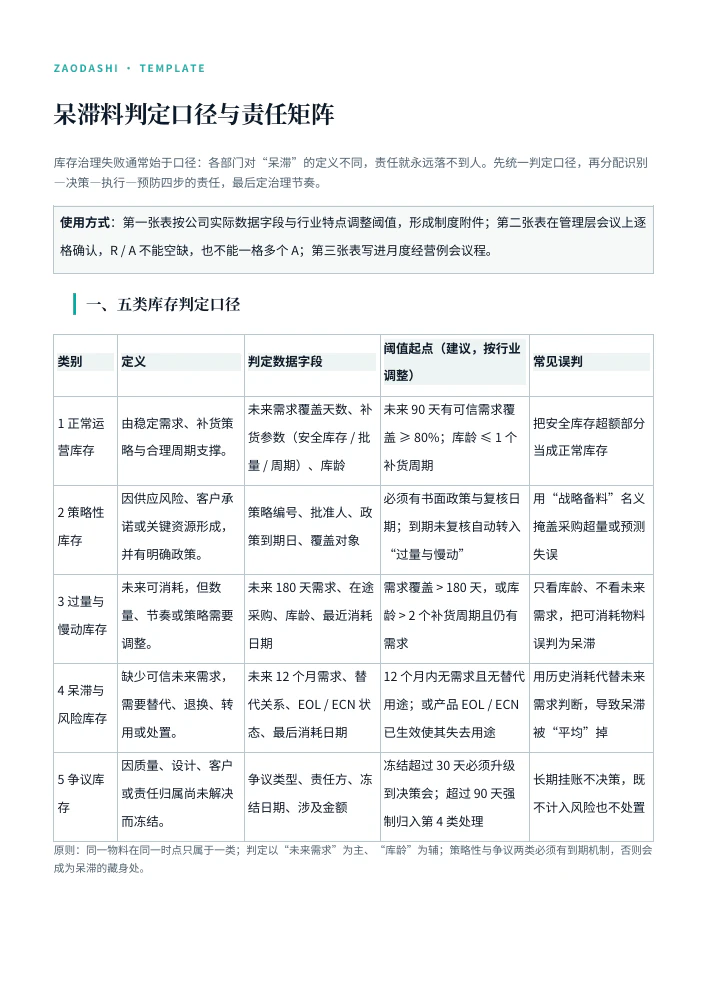
Stock on the ledger, shortages on the line, obsolete stock piling up

Book and physical stock differ, and released, pending, frozen and near-expiry batches mix. Shelf life and kitting are not system-controlled, so safety stock rises while obsolete stock has no owner.

Warehouse movements become the single source of quantity, linked to barcode batches, shelf life and quality release. Unreleased batches are blocked automatically, with named disposal owners.

Explore inventory and obsolescence →

Separate systems keep separate books, so cost never matches the floor

Finance ERP, shop-floor sheets and peripheral systems are disconnected. Issues, yield loss and reporting are entered late, and month-end accruals and actual costs are assembled by hand.

ABOS Suite gives materials and versions one identity. Scans and shop-floor reporting drive valuation and work-order cost, and accrual, reversal and settlement checks produce traceable reports.

Explore manufacturing and finance integration →

Find your stage. No need to start over.

Five stages, three routes: Greenfield, Coexistence and Shadow Cutover. Every step starts with a first-phase scope you can verify.

  1. 01

    Stage 1 · Paper and spreadsheets

    Formulas, BOMs, orders and stock sit in Excel and chats; codes differ and month-end counts are a scramble.

    Route 1: Greenfield. Load an industry pack, build master data, orders and barcode moves first, and get reliable records in place.

  2. 02

    Stage 2 · Digital finance, paper shop floor

    Finance has software, but material issue, scan reporting, shelf-life checks and inspection stay manual and late.

    Route 1/2: Add mobile scan reporting (/m/report), tooling registers and quality release control so physical moves post in real time.

  3. 03

    Stage 3 · An old ERP with gaps between teams

    An ERP runs, but formula and BOM changes, readiness, bulk-material transit and finance subledgers do not connect.

    Route 2: Coexistence. Keep the original system's transactions and approvals, connect ABOS Suite through a non-invasive data bridge, and add shortage alerts, transit views and subledger reconciliation.

  4. 04

    Stage 4 · A rigid legacy system

    An early custom system or ageing ERP is costly and opaque; a weekend cutover risks stoppages and inconsistent books.

    Route 3: Shadow Cutover. Mirror documents and run in parallel for at least one full accounting month, reconcile to zero differences, then switch domain by domain.

  5. 05

    Stage 5 · Core flows connected, AI next

    Core documents are online; you want fewer manual checks and earlier risk warning within strict data and permission boundaries.

    ABOS Agent: L0 - L2 agents check readiness and delivery risk and draft follow-ups; alerts reach people through a notification channel (illustrative, configured per client). Changes run only after the responsible person confirms.

Explore ABOS Suite modules and industry packs →

From a flat process diagram to the seven views of ABOS, delivered by a new generation of operations system

ABOS SUITE v1.3.1

ABOS Suite (v1.3.1) · The AI-era enterprise operations system

  • Nine capabilities, selected as needed: fulfilment, planning and readiness, purchasing, batch warehousing, shop-floor reporting, quality release, formulas and BOMs, costing and coordination (CRM · ERP · WMS · MES · QMS · PLM · SRM).
  • Two industry solutions: batch and component manufacturing (nutrition, fine chemicals, hose, rubber, auto parts) and project-configured manufacturing (cleanrooms, building materials, custom equipment).
  • Built-in ABOS Agent: read-only checks (L0) and evidence-based drafts (L1); posting or changing documents needs the responsible person's confirmation (L2). Core operations run without a language model.
Explore ABOS Suite →

ABOS FRAMEWORK

ABOS Framework · A three-dimensional extension of the supply chain model

  • Seven views, not one dimension: SCOR defines the horizontal steps; ABOS adds strategy, organization, capability, process, information, application and technology views, resolving unclear ownership and conflicting data definitions.
  • Dual maturity: software live, roles adopting, processes controlled and metrics improved are four different things, so software cannot hide missing management rules.
  • Three entry points: a diagnostic and blueprint, or software modules around delivery and inventory pain points, with no bundled mega-contract.
Explore the ABOS method →

Zaodashi practice: from delivery experience to engineering samples

Multinational semi-process manufacturing · Delivery experience: top-level blueprint and data governance

Global high-performance industrial hose group · Blueprint and supply chain coordination

Across business units, delivery cycles, inventory and cross-border master data, the seven ABOS views located end-to-end breakpoints, rebuilt RACI ownership and set a phased system roadmap.

Read the group blueprint practice →

Process manufacturing · Delivery experience: batch shelf life and inventory operations

Large nutrition and CDMO manufacturer · Supply-demand coordination and obsolete stock

With thousands of SKUs, formula changes and shelf-life limits, we set up routine operations from PLM formula versions and IBP planning to ageing-band obsolescence rules and disposal.

Read the process manufacturing practice →

Project-configured manufacturing · Route 2: Coexistence · Engineering validation sample

Large cleanroom and building materials manufacturer · Coexistence and finance subledger

Designed to leave the client's existing production and BOM system in place, an ABOS Suite data bridge links bulk-material transit, five-category batch completion, shortage alerts and accrual, reversal and settlement subledgers with reconciliation to the group finance system. The coexistence baseline was validated in a live demonstration using synthetic business data.

Read the coexistence practice →

Use 30 minutes to align your stage and smallest starting scope

The first discussion is not a pitch for an all-in-one package. Bring a delivery, readiness, inventory or legacy-integration problem. Together we identify your stage and an initial scope you can verify.

Book a focused discussion →